Grounds & Exterior Services
Temporary Fencing
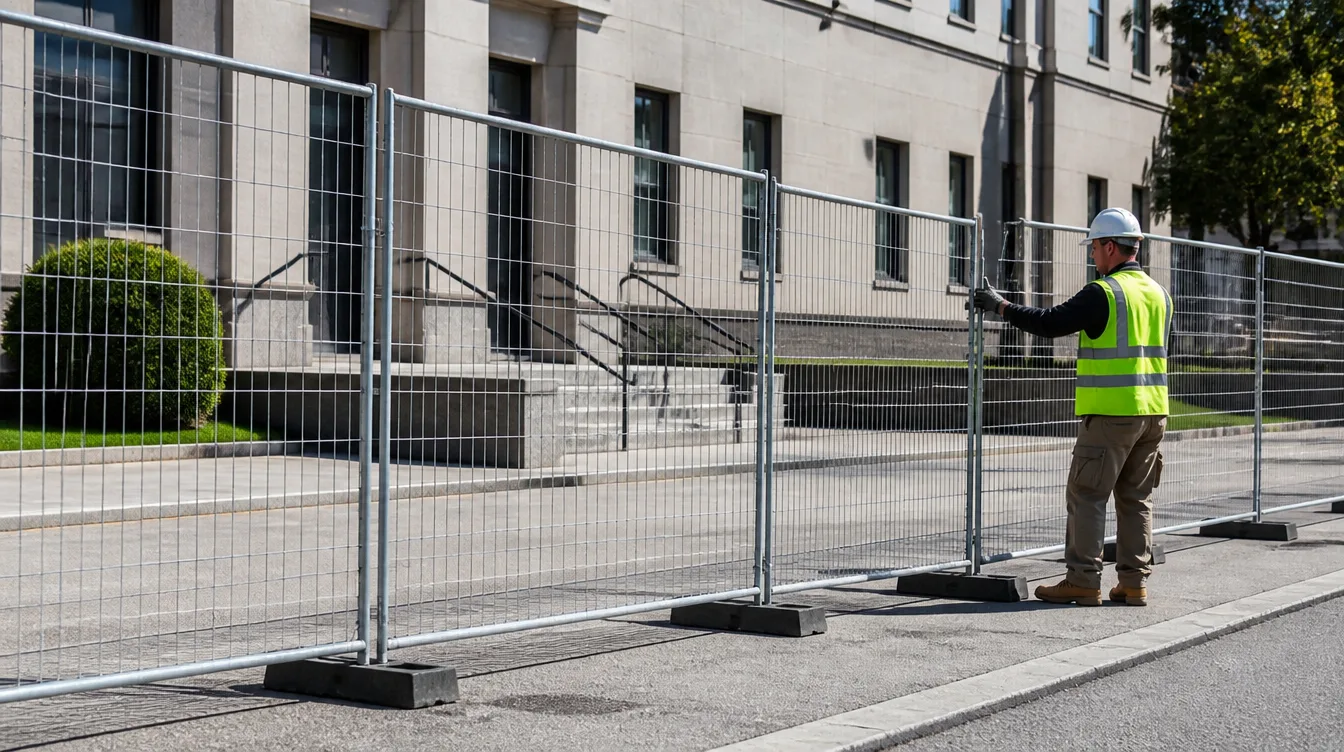
Temporary fence panels and barrier solutions for government facilities, public-sector properties, institutional sites, projects, controlled work areas, temporary operations, and other defined site-separation requirements.
Defined perimeter. Planned access. Documented placement.
Service Overview
Temporary Fencing Built Around the Site
Temporary-fencing requirements vary by perimeter length, fence height, surface conditions, project duration, access points, gate requirements, wind exposure, pedestrian and vehicle movement, site security procedures, and the purpose of the controlled area.
Azure Tide approaches each requirement by reviewing the defined fence layout, approximate quantities, required access points, surface and anchoring conditions, project duration, installation and removal windows, documentation requirements, and applicable performance standards.
Services may support construction or maintenance areas, temporary facility operations, restricted work zones, equipment or material areas, events, phased projects, temporary perimeters, and other clearly defined site-separation requirements.
Typical Scope Elements
Temporary Fence & Barrier Solutions
Depending on the site and governing requirement, temporary-fencing service may include one or more of the following defined elements.
Temporary Fence Panels
Temporary fencing can be configured according to defined perimeter lengths, panel dimensions, heights, locations, surface conditions, and project requirements.
Temporary Perimeter Enclosures
Defined areas can be enclosed with temporary fencing to establish visible site boundaries around projects, work zones, facilities, or other controlled areas.
Pedestrian & Vehicle Gates
Defined access openings or gate configurations can be incorporated according to pedestrian movement, vehicle access, delivery needs, project operations, and the approved layout.
Work-Area Separation
Temporary fencing can support separation of designated maintenance, construction, repair, staging, or other work areas from surrounding facility operations.
Facility & Site Boundaries
Temporary boundary fencing can be configured for designated exterior areas, unused spaces, temporary compounds, operational zones, or other defined facility locations.
Temporary Operations & Events
Defined temporary operations, public-sector events, maintenance periods, or short-duration site activities can include temporary fencing where required by the approved scope.
Screening Options
Privacy or visual screening can be evaluated where specifically required and compatible with fence configuration, wind exposure, anchoring, and site conditions.
Pedestrian-Area Separation
Temporary fencing can support defined separation between pedestrian areas and designated restricted or work zones when the required layout is established by the site plan or statement of work.
Relocation & Reconfiguration
Fence lines, gates, or defined sections can be relocated or reconfigured during a project where phased operations or changing site conditions are included in the requirement.
Multiple Areas & Project Phases
Requirements involving multiple fenced areas, buildings, phases, project zones, or site locations can be coordinated within one defined service scope.
Delivery, Placement & Removal
Delivery, placement, scheduled removal, and pickup can be incorporated according to the project dates, designated staging areas, access requirements, and approved layout.
Other Defined Temporary Fencing
Additional temporary fence, gate, screening, or site-separation requirements can be evaluated when clearly identified in the applicable solicitation, statement of work, or approved site plan.
Service Scheduling
Planned Around Project Duration & Site Access
Temporary-fencing schedules can be structured around mobilization dates, project duration, facility operating hours, phased work, access restrictions, gate requirements, site changes, and final removal dates.
-
Defined Project Duration
Service can be structured for short-duration needs, multi-week projects, extended temporary operations, or another defined period of performance.
-
Installation & Removal Windows
Placement and removal can be coordinated around facility operations, construction schedules, public access, deliveries, security procedures, and other defined site restrictions.
-
Phased Reconfiguration
Fence sections or access points can be scheduled for defined relocation or reconfiguration where project phases require the controlled area to change.
Performance Visibility
Placement Records & Quality Follow-Through
Where required by the scope, temporary-fencing performance can be supported through placement records, photographs, configuration documentation, and exception reporting.
Delivery & Placement Records
Service date, facility, work area, approximate fence quantities, gate locations, placement activity, and other required service information.
Photographic Documentation
Photographs can document designated fence lines, gates, screening, access points, and overall placement following installation or reconfiguration.
Configuration Records
Defined fence lengths, panel types, heights, gate configurations, screening, phases, or other measurable elements can be documented where required.
Exception Follow-Through
Access conflicts, damaged sections, displaced panels, site changes, blocked gates, weather-related issues, or other service exceptions can be documented for review.
Requirement Planning
Information That Helps Define the Scope
Providing available layout, perimeter, gate, surface, duration, access, and site-condition information helps clarify the temporary-fencing requirement.
- Facility or project address and each area requiring temporary fencing or controlled separation.
- Approximate perimeter length, fence height, number of separate fenced areas, and any defined panel or system specifications.
- Site plan, marked-up drawing, photographs, dimensions, property or project boundaries, and required fence alignment when available.
- Number, type, location, and approximate width of pedestrian gates, vehicle gates, delivery openings, or other required access points.
- Surface conditions such as asphalt, concrete, soil, gravel, landscaping, slopes, curbs, drainage features, or other site characteristics affecting placement.
- Required installation date, anticipated service duration, project phases, relocation requirements, final removal date, and permitted work windows.
- Screening requirements, wind exposure, traffic conditions, pedestrian routing, secure areas, loading access, facility operating hours, and other site restrictions.
- Applicable statement of work, site drawings, underground-utility information, project plans, photographs, anchoring restrictions, permit requirements, solicitation documents, and acceptance criteria.
Need Temporary Fencing?
Contact Azure Tide with the site location, required perimeter, fence and gate specifications, service duration, layout information, site conditions, scheduling constraints, and applicable requirement details.