Wastewater & Facility Services
Grease Trap Services
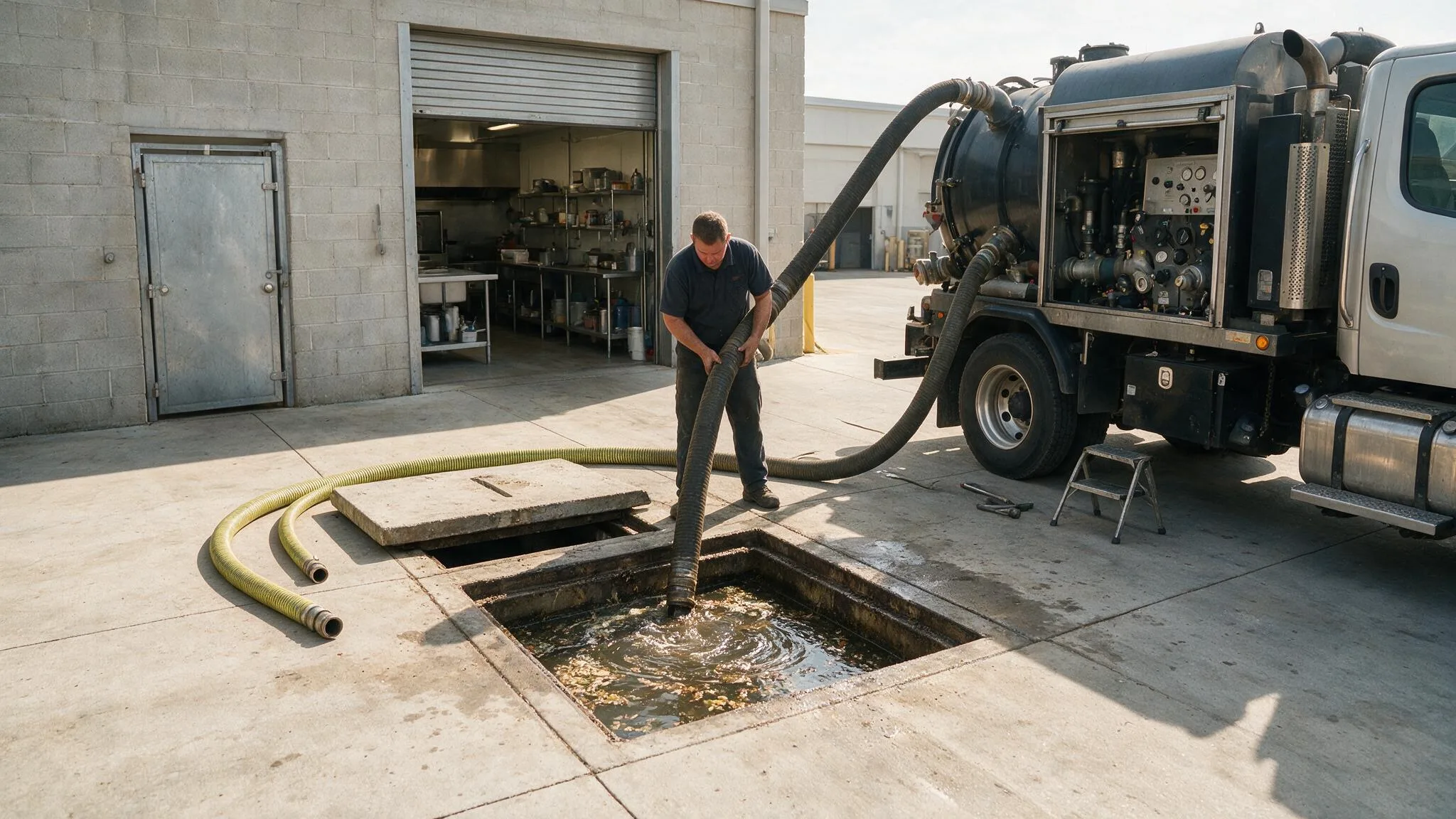
Grease-trap and grease-interceptor pumping, cleaning, waste removal, and service documentation for government facilities, public-sector properties, institutional kitchens, food-service operations, and other defined facility requirements.
Scheduled pumping. Documented service. Consistent follow-through.
Service Overview
Grease Trap Service Built Around the Facility
Grease-trap and interceptor requirements vary by equipment size, configuration, food-service volume, wastewater flow, accumulation rate, access conditions, local requirements, and established pumping frequency.
Azure Tide approaches each requirement by reviewing the identified grease-management equipment, service locations, pumping and cleaning expectations, schedule, access restrictions, disposal requirements, documentation expectations, and applicable performance standards.
Services may be structured as recurring preventive maintenance, scheduled pumping, periodic cleaning, condition-based service, or a defined one-time requirement depending on the applicable scope.
Typical Scope Elements
Grease Trap & Interceptor Services
Depending on the equipment and governing requirement, grease-management service may include one or more of the following elements.
Grease Trap Pumping
Removal of accumulated fats, oils, grease, solids, and wastewater from designated grease traps or interceptors according to the defined service requirement.
Grease Interceptor Service
Pumping and servicing of designated larger grease interceptors where size, access, configuration, and service requirements are identified in the scope.
Interior Cleaning
Cleaning of accessible interior surfaces and removal of accumulated grease or solids where cleaning is included in the applicable service specification.
Accumulated Solids Removal
Removal of settled solids and accumulated material from accessible portions of the designated grease-management equipment where required.
Baffle & Component Cleaning
Cleaning around accessible baffles, tees, walls, and internal components where included in the service scope and appropriate for the equipment configuration.
Observable Condition Reporting
Observable issues such as damaged lids, deteriorated components, unusual accumulation, access problems, or other service-area conditions can be documented where required.
Waste Removal & Transport
Removal and transport of collected grease-trap waste for handling or disposal according to the applicable service requirement and governing disposal rules.
Disposal Documentation
Disposal records, receipts, manifests, tickets, or other supporting documentation can be incorporated where required by the governing scope or jurisdiction.
Recurring Maintenance Programs
Grease-trap service can be structured on a recurring schedule based on the facility’s operating conditions, equipment, applicable requirements, and defined maintenance frequency.
Multiple Traps or Service Points
Requirements involving multiple traps, interceptors, kitchens, buildings, or facility locations can be evaluated as part of the overall service scope.
Additional Scheduled Service
Supplemental pumping or cleaning can be evaluated when increased facility usage, operational changes, or documented conditions create an additional service need.
Other Defined Grease Services
Additional grease-management service requirements can be evaluated when clearly identified in the applicable solicitation, statement of work, or facility requirement.
Service Scheduling
Recurring Pumping & Preventive Maintenance
Grease-trap service frequency can be structured around equipment capacity, food-service activity, accumulation rates, facility operating conditions, and applicable maintenance requirements.
-
Scheduled Recurring Service
Monthly, quarterly, semiannual, or other defined intervals can be established according to the equipment, facility usage, and governing requirement.
-
Defined Service Windows
Service can be coordinated around food-service operations, kitchen schedules, loading areas, facility access, security procedures, and other operating restrictions.
-
Frequency Adjustments
Service frequency can be reviewed when operating volume, occupancy, food preparation, equipment loading, or documented accumulation conditions materially change.
Performance Visibility
Service Records & Documentation
Where required by the scope, grease-trap servicing can be supported through service tickets, pumping records, disposal documentation, photographs, and exception reporting.
Service Tickets
Service date, facility, equipment location, unit identification, work completed, and other required service-ticket information.
Pumping & Quantity Records
Pumping volume, estimated quantity, equipment capacity, or other service measurements can be documented where required by the applicable scope.
Disposal Documentation
Disposal receipts, facility records, manifests, weight information, or other documentation can be provided when required by the contract or governing jurisdiction.
Condition & Exception Reporting
Access problems, damaged components, unusual accumulation, service limitations, or other observable conditions can be documented for follow-through.
Requirement Planning
Information That Helps Define the Scope
Providing available equipment, capacity, access, schedule, and disposal information helps clarify the grease-trap service requirement.
- Facility address and exact location of each grease trap or interceptor.
- Number of traps or interceptors and their approximate capacities, dimensions, manufacturer information, or model numbers when available.
- Whether equipment is located indoors, outdoors, underground, in a kitchen, within an enclosure, or in another restricted-access area.
- Required pumping frequency, service dates, permitted service windows, and any minimum or maximum servicing intervals.
- Vehicle access, hose distance, gates, security procedures, loading-zone restrictions, traffic controls, or other servicing limitations.
- Required cleaning tasks, pumping method, disposal requirements, reporting expectations, or required post-service condition.
- Applicable statement of work, photographs, site plans, previous service records, solicitation documents, local requirements, or required completion records.
Need Grease Trap Services?
Contact Azure Tide with the facility location, grease-trap or interceptor information, desired service frequency, access conditions, and applicable requirement information.